








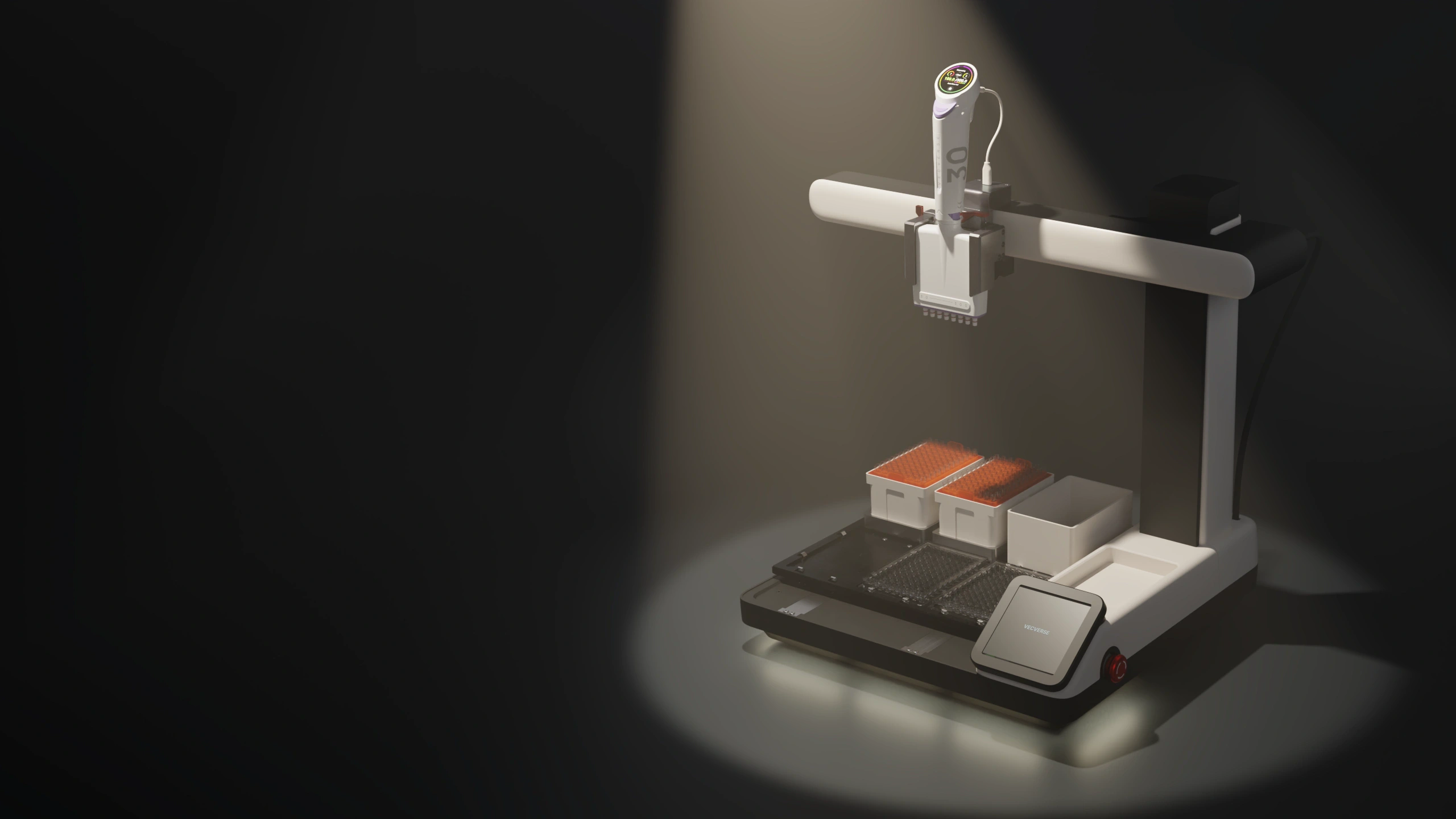
@ROBOT PRO
Leave repetition to the workstation.
Keep the possibilities for yourself.
Bring your workflow. Explore @Robot Pro with us.
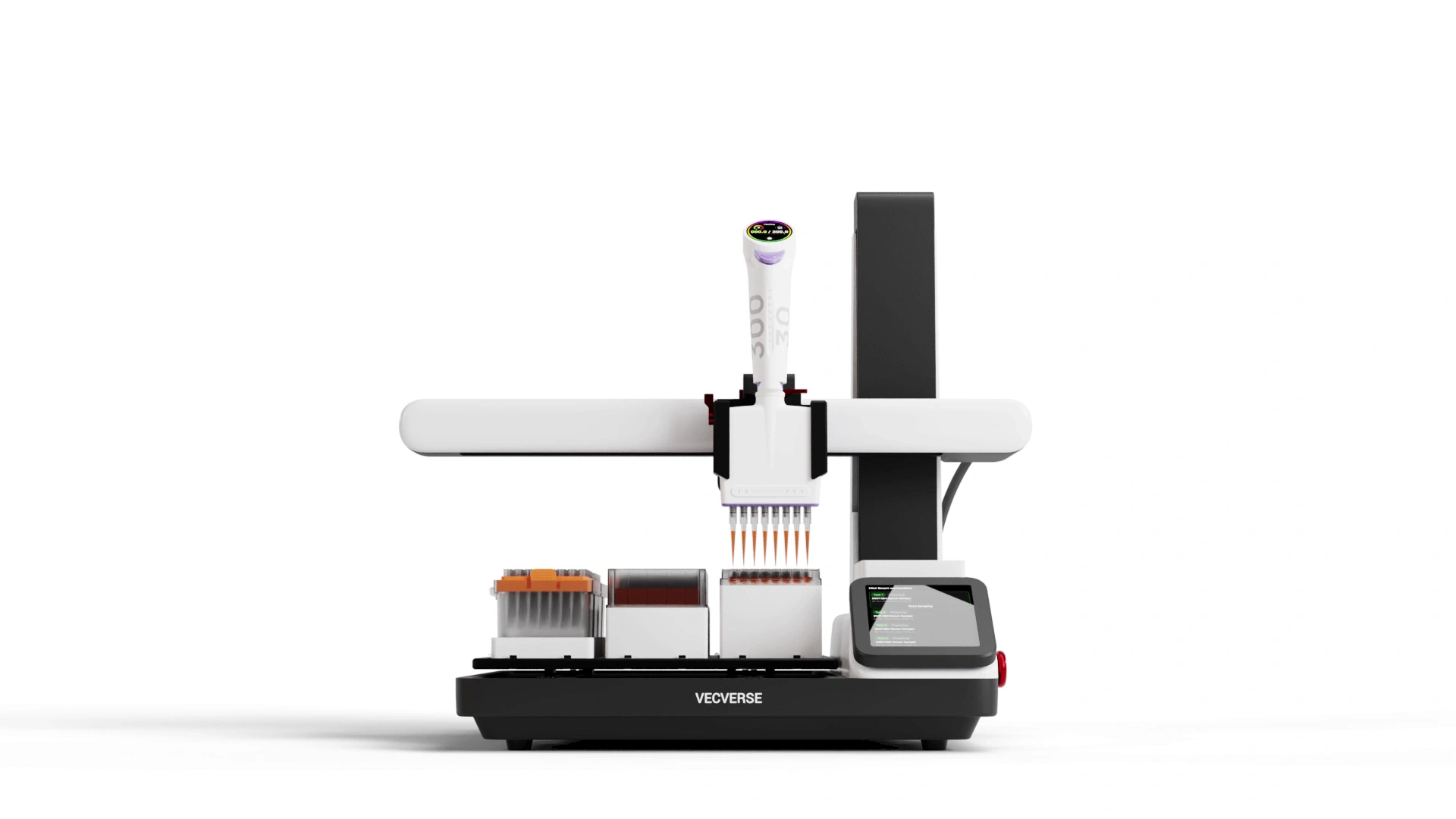
01 / Flexible deck
Six deck positions
Configure your layout
Tips, samples and reagents, each in its place.
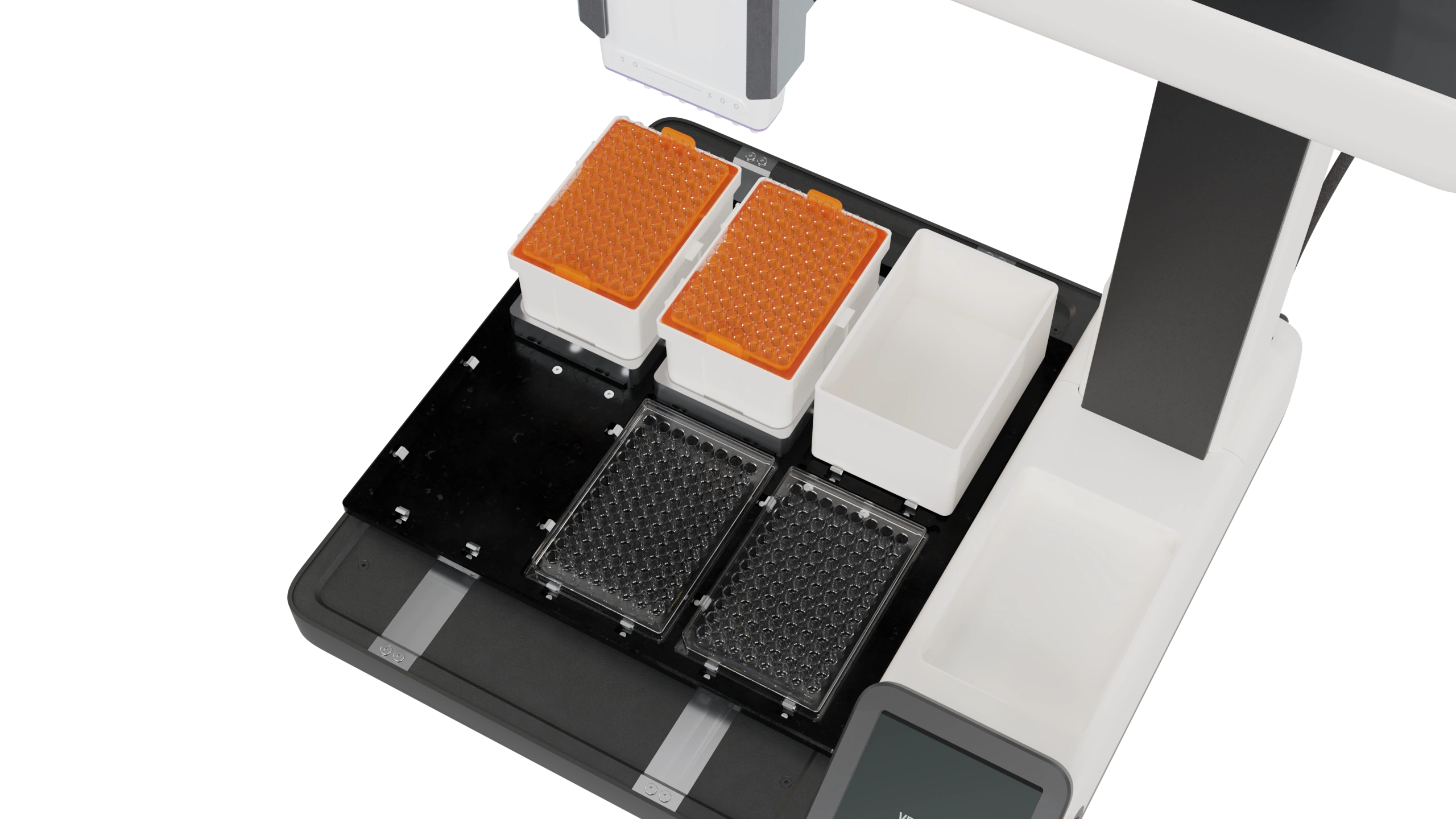
A place for every piece of labware.
Arrange six positions around your experiment.
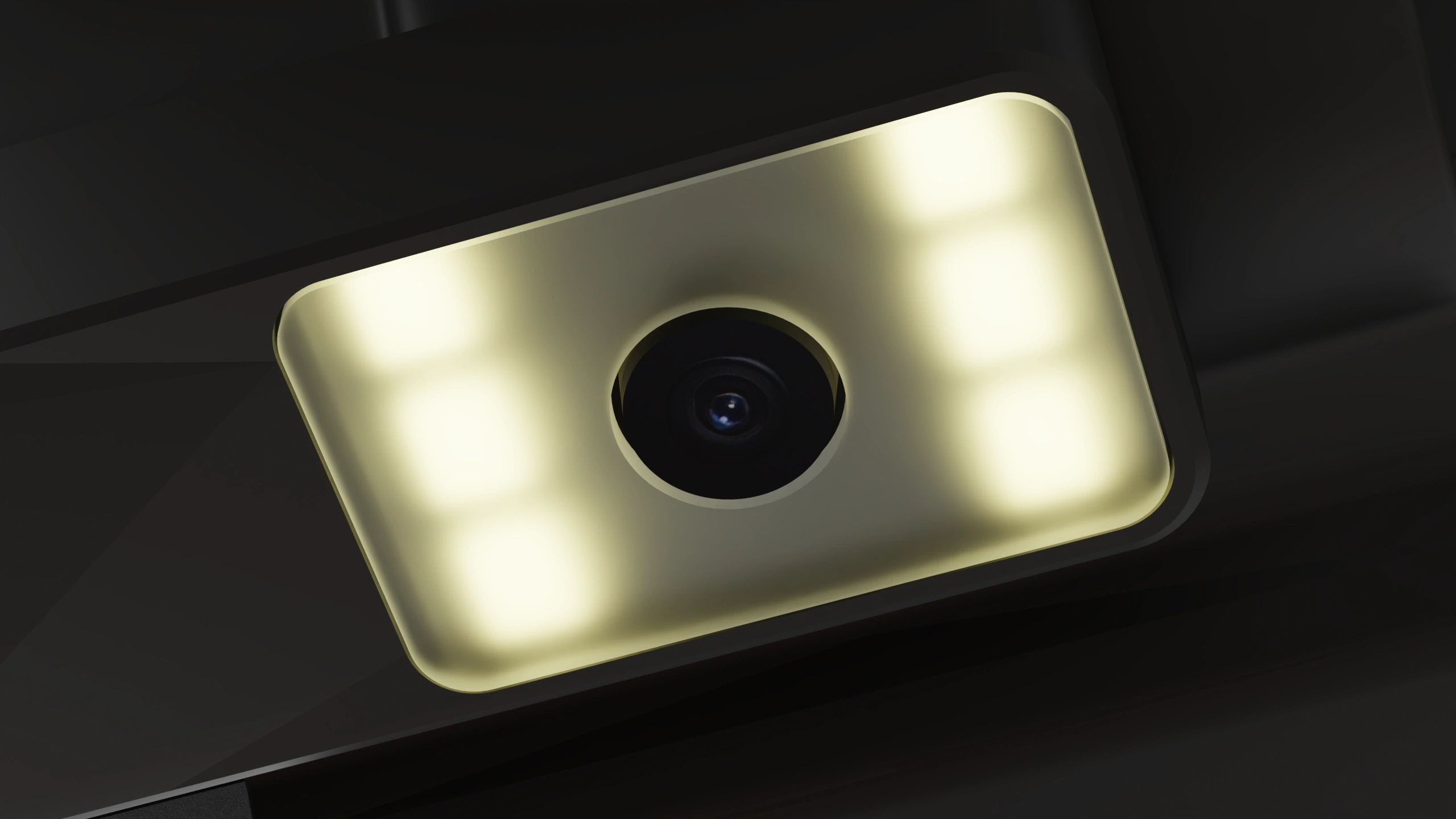
02 / AI vision recognition
See the deck.
Understand the layout.
01 / 02
A place for every piece of labware
Clear imaging for quick labware verification
03 / Automated pipetting
Repeated steps.
One continuous workflow.
01 / 04
Automatic tip loading
A broad labware library, with individual adaptation to your requirements
- 01Load tips
- 02Aspirate
- 03Transfer and dispense
- 04Eject tips
04 / Applications
One workstation.
More possibilities.
01 / 09
ELISA
ELISA workflow
From reagent dispensing to a wide range of experimental workflows.
- ELISA
- qPCR setup
- Reagent dispensing
- Magnetic bead extraction
- Cell culture and seeding
- Serial dilution
- Protein sample preparation
- NGS library preparation
- LC-MS sample preparation
05 / Pipetting modules
Move beyond convention. Aim for precision.
Single-channel pipetting module
| Test volume / µL | Relative volume error / % | Repeatability / % |
|---|---|---|
| 1 | ±2.5 | ≤1.8 |
| 5 | ±1.5 | ≤0.8 |
| 10 | ±1 | ≤0.4 |
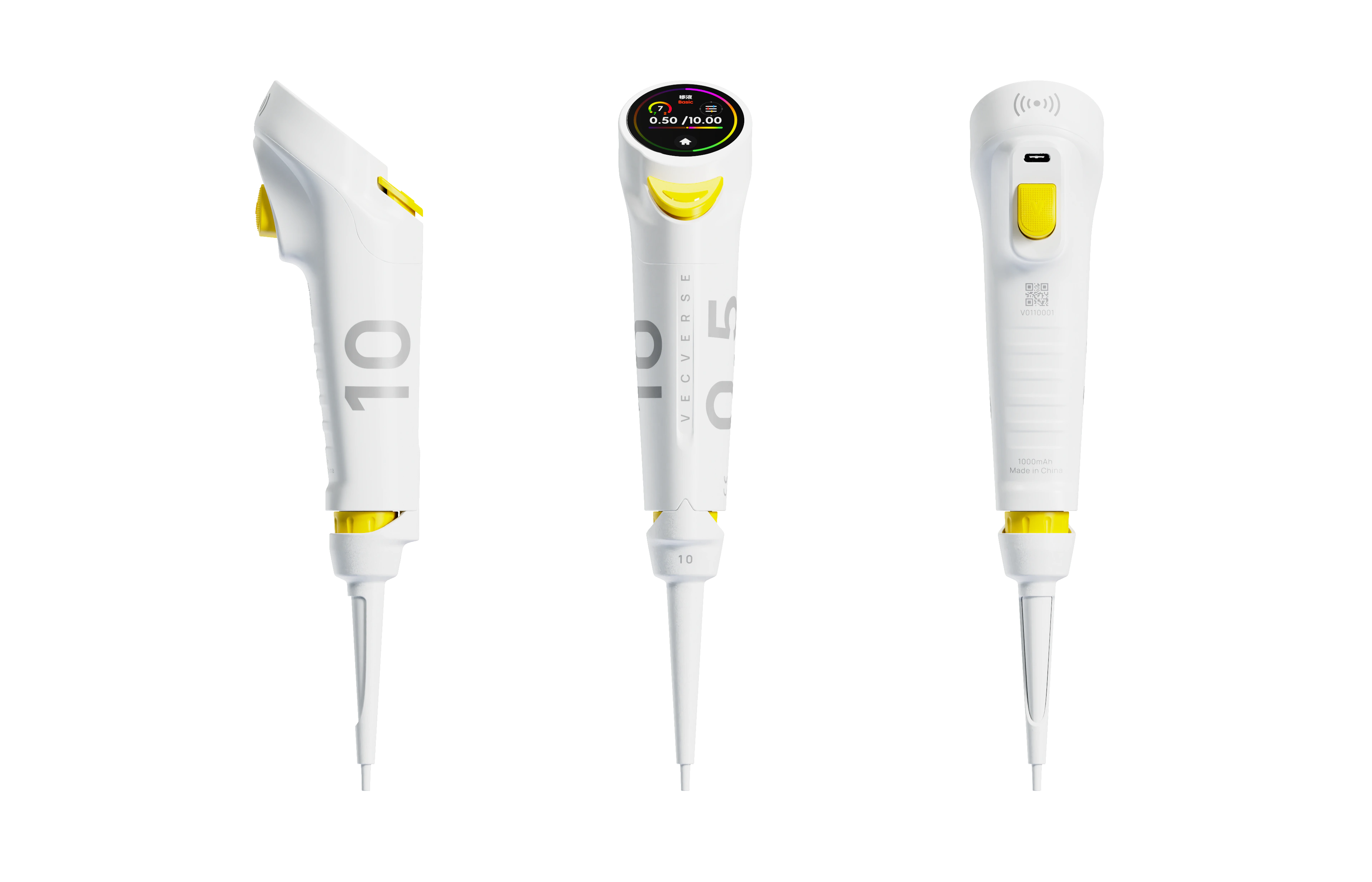
Tested using the ISO 8655-6 gravimetric method; relative volume error and repeatability at the applicable listed test points meet the relevant requirements of JJG 646—2006. Tests use pure water conforming to ISO 3696, an ambient temperature of (20 ± 3) °C and relative humidity of 45%–80%, with temperature variation not exceeding ±0.5 °C during measurement.
Tests include 10%, 50% and 100% of nominal volume and the additional listed points, as specified for each model. These specifications apply to pipetting modules under the stated conditions with matching tips, not to the complete workstation under all liquid and experimental conditions. Minimum adjustable volume is for reference and does not imply an accuracy commitment at unlisted test points.
06 / Design details
Quick release. Flexible changeovers.
Single-channel quick-release clamp
For 0.5–1000 µL pipetting modules
Eight-channel quick-release clamp
For 0.5–1250 µL pipetting modules
Before you begin
A workstation
for your experiments.
How do I choose a deck configuration?+
Start with the sample count and pipetting steps in one experiment: list the starting positions of samples and reagents, destination vessels, transfer volumes, and rules for mixing and tip changes. Then allocate tip racks, plates, tube racks and reservoirs across the six positions. Consider eight channels for column-wise transfers, or a single channel for individual samples and flexible well selection. For temperature control, shaking or magnetic separation, also confirm the modules, deck space and manual handoffs required.
Which pipetting modules and labware can I use?+
Single- and eight-channel modules cover 0.5–1000 µL and 0.5–1250 µL respectively, with matching quick-release clamps. Select a model based on your usual transfer volumes and the specifications at the listed test points. Labware includes tips, tip racks, plates, tubes and reservoirs. Provide the brand, catalogue number and dimensions so that tip fit, well positions and height can be checked. Existing labware can be assessed individually; unconfirmed models require compatibility validation first.
How can I assess whether my experiment is suitable?+
Begin with repeated pipetting steps such as dispensing, reagent preparation or serial dilution. Share your SOP, samples per batch, labware list, liquid properties, volume range and expected results. Note any viscous, volatile or foaming liquids. We can identify automatable steps, required configurations and manual interventions, then use representative demonstrations and trials to assess transfer results, repeatability and time requirements.